Sp5der versus Competing Streetwear Labels: What Genuinely Distinguishes It?
Invest time in street-style culture in 2026 and you’ll find yourself amid an ongoing discussion: where does Sp5der truly stand relative to the recognized leaders in the genre? Does it authentically belong in the same tier with brands like Supreme, BAPE, or Off-White, or is it a hype-driven brand riding cultural momentum that could disappear as rapidly as it came? These are legitimate questions, and addressing them truthfully demands going beyond reflexive brand allegiance to study what Sp5der genuinely provides compared to its competitors along the measures that count most to dedicated urban fashion enthusiasts: aesthetic vision, build quality, cultural realness, pricing, and future direction. This breakdown measures Sp5der against five key rivals — Supreme, BAPE, Off-White, Corteiz, and Essentials by Fear of God — to pinpoint where it truly outperforms, where it comes up lacking, and what makes it categorically different from all competitors in the space. The conclusion is more nuanced and more positive for Sp5der than cynics expect, and understanding why requires engaging with the brand on its own terms instead of evaluating it by standards it was never built to hit.
Sp5der vs. Supreme: Two Brands, Two Eras of Urban Fashion
Supreme is the company that created contemporary drop-release culture, and every conversation about Sp5der necessarily involves holding the two up for comparison — but they’re far more distinct than a shallow look at their release model would indicate. Supreme grew out of New York’s skate and punk subcultures in 1994, and its visual philosophy — the box logo, art-world partnerships, and lower Manhattan cool — is rooted unique streetwear designs in a distinct place and subcultural tradition that is entirely different from Sp5der’s Atlanta-based hip-hop heritage. Sp5der’s visual language is bold and joyful; Supreme’s is restrained and ironic, deploying irony and restraint as defining design approaches. The consumer experience differs significantly too: Supreme’s resale ecosystem has been thoroughly professionalized, with bots, resellers, and retail partnerships that have pushed the label away from its subcultural origins in a way that many original fans resent. Being a far newer brand, still holds more of the raw, community-fueled spirit that Supreme embodied in its first years. Regarding product quality, both brands deliver premium streetwear-grade garments, though Supreme’s longer manufacturing history means its manufacturing consistency is more proven and consistent across product categories. For anyone seeking cultural credibility tied to hip-hop rather than skateboarding culture, Sp5der prevails by its very nature — it’s not merely proximate to the music scene it was actually born from it.
Sp5der vs. BAPE: Bold Graphic Energy Going Head-to-Head
Of all the major streetwear brands, BAPE is perhaps the most aesthetically similar to Sp5der — both embrace bold graphics, vivid colors, and a maximalist visual philosophy that prioritizes impact over restraint. BAPE, established by NIGO in Tokyo back in 1993, pioneered the idea of celebrity-driven, limited-run streetwear for the world at large and established the visual framework that Sp5der now operates within. But BAPE’s cultural peak — during its prime in the mid-2000s when icons like Lil Wayne, Pharrell Williams, and Kanye West regularly appeared wearing BAPE — is behind them, and what BAPE releases today, while still credible, holds a distinctly retrospective flavor that Sp5der entirely lacks. Sp5der comes across as urgently current in a manner that BAPE, with its three-decade history, cannot fully claim in 2026. On price, the brands are comparable, with BAPE hoodies typically ranging from $200 to $450 and Sp5der’s retail pricing landing at $200–$400. Construction quality is comparable as well, with both brands delivering heavyweight fabrics and precise graphic work that support their premium pricing in the premium streetwear category. The key differentiator is cultural currency: in 2026, Sp5der carries more immediate excitement among the 16-to-30 demographic that marks the forefront of streetwear culture, while BAPE retains greater archival credibility for dedicated collectors and longtime fans who lived through its peak years directly.
Sp5der vs. Off-White: Street Style and High Fashion at Different Altitudes
Off-White, founded by the late Virgil Abloh in 2012, sits at a different tier in the fashion ecosystem than Sp5der — more overtly luxury-oriented, costlier, and more committed to the conversation between street fashion and high-end couture. Holding Sp5der up against Off-White tells us less about which brand wins and more about each brand’s purpose and audience and for whom each was created. Off-White’s design vocabulary — the iconic quote marks, diagonal graphic stripes, and deconstructed clothing — communicates to a fashion-educated community that travels easily between the spheres of high fashion and street style. Sp5der addresses a community that is grounded in hip-hop and genuine street credibility, for whom fashion-world cachet is less important than music-world co-signs. Price points differ substantially, with Off-White sweatshirts generally selling at $400–$700, positioning Sp5der as the more affordable alternative in the luxury-adjacent segment. After Virgil Abloh’s passing in 2021, Off-White has pressed on under fresh creative leadership, but the brand’s identity has evolved in directions that have estranged some of its original audience, providing space that newer names like Sp5der have stepped into for younger buyers. Both brands reward buyers with outstanding graphics, premium build quality, and real cultural authenticity — they merely inhabit different cultural territories, and most serious streetwear enthusiasts eventually find room in their wardrobe and aesthetic for both.
Sp5der vs. Fear of God’s Essentials Line: Contrasting Design Philosophies
FOG Essentials embodies perhaps the sharpest philosophical contrast to Sp5der in the contemporary streetwear landscape — the Essentials line is understated, neutral-toned, and subdued, while Sp5der is graphic-heavy, vivid, and celebratory. The Essentials label by Jerry Lorenzo, which serves as the entry-level range of the broader Fear of God universe, produces premium basics in understated natural color tones and low-key graphic elements that can be worn in almost any context without standing out in the crowd. The Sp5der hoodie, by contrast, announces itself immediately and unapologetically — it was never designed to be quiet, and nobody who puts it on is attempting to blend in. Pricing is another significant difference: Essentials hoodies retail from around $90 to $130, making them far more affordable compared to Sp5der’s $200–$400 retail. However, the lower price point means the Essentials line lacks the rarity and collector appeal that form the core of Sp5der’s appeal, and its resale premiums are correspondingly modest relative to Sp5der’s frequently substantial secondary market appreciation. Selecting one over the other is not really a question of quality — each produces high-quality pieces at their respective price points — but of self-expression and deliberate aesthetic choice. For those seeking a functional, understated closet foundation, Essentials does that job exceptionally well. If you’re after one standout statement piece that makes a bold statement about your connection to hip-hop culture and the maximalist arm of streetwear, Sp5der is the answer.
Brand Comparison Table
| Brand | Aesthetic Direction | Hoodie Retail Price | Cultural Roots | 2026 Hype Level | Resale Premium |
|---|---|---|---|---|---|
| Sp5der | Maximalist, hip-hop, web graphics | $200–$400 | Atlanta hip-hop | Very High | High |
| Supreme | Understated, skate-culture-rooted, box logo icon | $150–$350 | NYC underground skate and punk scene | High on legacy credibility | Among the Best |
| BAPE | Japanese pop-art maximalism with signature camo | $200–$450 | Tokyo street | Moderate | High |
| Off-White | Street-luxury fusion with text-graphic design | $400–$700 | High fashion crossover | Moderate | Notable |
| Corteiz | Underground, utilitarian | $100–$250 | London grassroots streetwear scene | Strong and growing | Mid-to-High |
| Fear of God Essentials | Clean minimalist basics in neutral tones | $90–$130 | Los Angeles luxury-adjacent lifestyle | Steady Moderate | Modest |
What Truly Distinguishes Sp5der from Every Other Brand
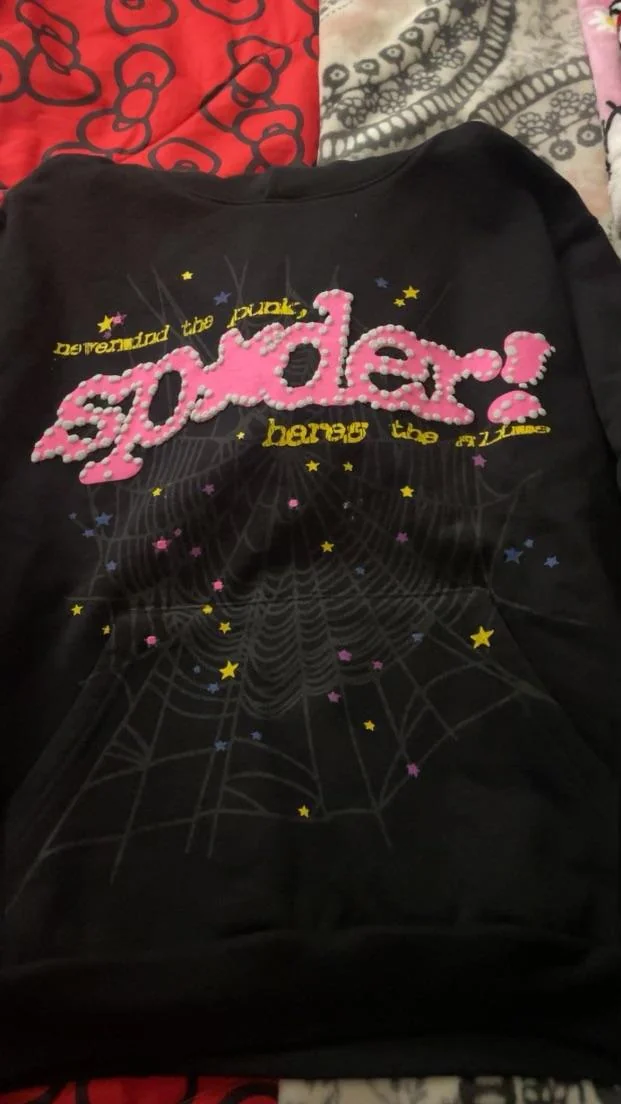
Freed from the noise and judged on substance, Sp5der has several characteristics that genuinely distinguish it from its competitors in real, significant dimensions. For starters, its founding-figure authenticity has no peer across today’s streetwear market: Young Thug isn’t a hired celebrity spokesperson who provided his name for licensing, but the design mind behind his own creative project, and that distinction is detectable in the design coherence and genuine personality in every Sp5der garment. Additionally, the brand’s visual vocabulary belongs entirely to it — the web graphics, rhinestone maximalism, and Y2K color palette create a unified visual identity that is not borrowed from or derivative of any brand that came before, which is a real accomplishment in a category where originality is rare. Moreover, Sp5der’s place where hip-hop, streetwear, and fashion converge renders it distinctly readable across multiple cultural contexts simultaneously, granting it cultural range that more niche brands struggle to achieve. As stated by Highsnobiety, brands that attain lasting cultural significance are invariably those capable of expressing a genuine and distinctive cultural perspective — a definition that applies to Sp5der much more than many of its slicker, more commercial peers. Lastly, the brand’s comparatively young age means it has not yet had time to settle into the complacency of a heritage brand, and the continued creative drive in Sp5der’s design work reflects a brand still operating with a point to make.
In Summary: When to Choose Sp5der Over Alternatives
Sp5der is the ideal selection for consumers whose style preferences, personal identity, and closet objectives align with what the brand actually offers, and possibly the wrong fit for anyone wanting what it wasn’t built to offer. If your aesthetic runs maximalist, if you connect with Young Thug’s creative vision, and if the hip-hop world is the central context that informs your approach to clothing, Sp5der will complement your wardrobe and your identity more naturally than almost any alternative on the market. For those who weight resale value heavily as part of your purchasing decision, Sp5der’s track record is strong, even if Supreme’s more established resale performance and deeper liquidity render it more reliable as an investment. If versatility and neutrality are your priorities, Fear of God Essentials offers more bang at a lower price and with much greater outfit range. The streetwear market in 2026 offers genuinely excellent choices across a range of aesthetics and price points, and the most astute street-fashion consumers are people who engage with each brand on its own footing rather than ranking them in a false hierarchy. What Sp5der brings to the table is a mix that no competitor brand fully reproduces: true hip-hop origins, one-of-a-kind design language, premium build quality, and genuine ongoing cultural relevance. Find out more about how Sp5der stacks up through impartial coverage from Complex, which provides detailed brand analysis and community discussion on contemporary streetwear rankings.